Who Owns an AI-Generated Ad? Copyright and Usage Rights Explained
What the law says about AI-generated video, and the likeness, disclosure and contract points to check before launch
What the law says about AI generated video copyright, what it means for brand ads, and the likeness, disclosure and contract points to check before launch.
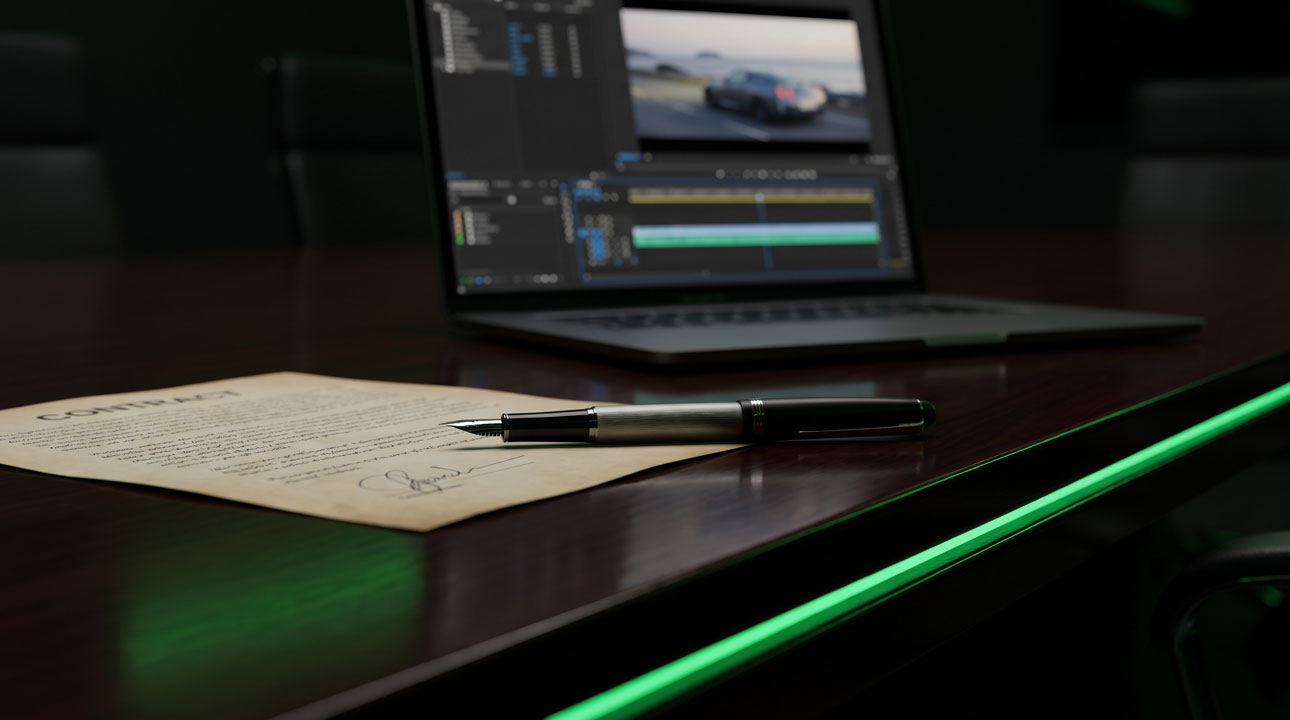
Your AI-made ad is finished, approved and ready to run. Then someone from legal asks a simple question: do we actually own this? Can we stop a competitor from copying it? Can we run it on TV in another country next year? These are the practical questions behind AI generated video copyright.
For filmed ads, the answers are usually settled by contracts with the crew, talent and music libraries. For AI-generated video, the rules are newer and still changing. Most brands can use AI ads safely, but only if a few things are checked before launch.
This guide covers what the law currently says about AI generated video copyright, what that means for brands in practice, the risks around likeness, music and disclosure, and what your contract with a production partner should include. It's general information, not legal advice, so check anything important with a lawyer in your market.
Can AI-generated video be copyrighted?
In the United States, the short answer is: not on its own. The parts a human creates can be.
What US law says
The US Copyright Office requires human authorship for copyright protection. In its January 2025 report on AI, it said that prompts alone aren't enough, because they work more like instructions than creative expression. The courts have backed this up. InThaler v. Perlmutter, an appeals court upheld the human authorship requirement in 2025, and in March 2026the Supreme Court declined to review the case, leaving that ruling in place.
Where the human contribution comes in
A commercial is rarely just raw generated output. People write the script, plan the shots, choose takes, edit the sequence, design titles, add sound and music, and grade the color. Those human contributions can be protected even if individual generated frames might not be. Legal advisers recommend documenting this human work, so it's clear what was created by people.
Other countries are still deciding
Different countries are taking different positions, and some have no clear rule yet. If your campaign runs in several markets, the level of protection may vary between them.
What does AI generated video copyright mean for brands?
For most advertising, weaker copyright protection is a smaller problem than it sounds.
Short-lived ads carry little risk
A social ad that runs for a few weeks is unlikely to be copied in a way that hurts you. Even if it were, the campaign would have moved on. For most performance advertising, the practical risk is low.
Long-running brand assets need more thought
A signature visual, a recurring brand character or a hero film you plan to use for years is different. If competitors could reuse parts of it freely, that matters. For these assets, the human creative contribution should be substantial and well documented, and trademark protection for characters or visual marks may be worth discussing with a lawyer.
How does AI generated video copyright apply to brand characters?
Recurring AI characters, such as a presenter who appears in every campaign, are a special case. They can become valuable brand assets, so it's worth thinking about protection early.
Characters as brand assets
A character that appears across dozens of videos and becomes recognizable has real value. If another company created a near-identical presenter, it could confuse customers. That's why the question of protection matters more for characters than for a one-off ad.
Document the design work
The human decisions behind a character, including the personality brief, wardrobe choices, reference sheets, voice direction and the way the character is written, are the parts most likely to count as human authorship. Keep these records. They help show what people created, which is the core of the human authorship test.
Consider trademark protection
Copyright isn't the only tool. A character's name and distinctive look may be protectable as a trademark in some markets, the same way brands protect mascots. This is a question for a lawyer, but it's worth asking once a character becomes a lasting part of your brand.
What does the tool's license allow?
Every AI video and image tool has terms of service, and they matter.
Commercial use isn't automatic
Most paid plans allow commercial use of what you generate. Some free or trial tiers don't, and some tools restrict certain uses, like political content or content involving real people. Your production partner should be using plans that allow commercial work and should be able to tell you which tools were used.
Tools come and go
OpenAIclosed the Sora app in April 2026 and switched off the Sora 2 API in September. Content made under valid terms doesn't stop being usable when a tool shuts down, but it's a good reason to keep records of which tools and plans produced each asset.
What about real people and likeness?
This is where the biggest risks sit.
Never generate real people without consent
Generating a celebrity, influencer, employee or anyone recognizable without written permission can lead to legal claims in many countries, which protect a person's image and voice. The same goes for voices that imitate a real person. Original AI characters avoid the problem entirely.
No fake testimonials
In the US, the FTC's rule on fake reviews, in force since October 2024,bans testimonials that misrepresent whether the reviewer exists, including AI-generated ones. An AI character can present or demonstrate a product. It shouldn't pose as a real customer sharing real results.
Do you have to label AI-generated ads?
Increasingly, yes, depending on where the ad runs.
The EU AI Act
In the European Union, transparency rules for realistic AI-generated content under Article 50 of the AI Actbegan applying on 2 August 2026. The Commission's draft guidance focuses on content that looks real and could be mistaken for authentic footage, and advisers have pointed out that marketing content may fall within scope. If you run realistic AI ads in the EU, plan for disclosure.
Platforms and industry bodies
Platforms have their own labeling requirements for realistic synthetic content, and industry awards are following. Cannes Lions nowrequires entrants to disclose AI-generated or AI-assisted work. Building disclosure into your process now is easier than retrofitting it later.
Music, sound and brand marks
The visuals aren't the only part of an ad with rights attached.
AI music has its own terms
AI music tools have their own licenses, and streaming platforms are starting to label AI music.YouTube Music added AI labels in October 2026. For ads, licensed stock music or commissioned tracks are still the safest choice for important campaigns. If you use AI music, keep the license on file.
Check every frame for other brands
Models sometimes produce things that look like other companies' logos or packaging in the background. A blurred can on a shelf that resembles a famous drink can cause problems. Every frame should be checked before delivery.
What should your contract cover?
Whoever makes your AI video, the agreement should answer these points in writing:
If you're still choosing a partner, our guide onhow to choose an AI video agencyincludes these questions and a few more.
Using AI ads with confidence
AI generated video copyright is still a moving area, but AI-made ads can be used safely by most brands. Raw AI output has limited copyright protection in the US, but the human work around it can be protected. The bigger risks are likeness, fake testimonials, missing disclosure and unclear contracts, and all of them can be handled with good process.
At GAAJ, we'd rather answer these questions before a project starts than after it launches. If rights, disclosure or ownership are a concern for your next campaign,book a calland ask us anything on the list above.